Government engages IMF to do audit on corruption
The government has requested the International Monetary Fund (IMF) to help it make a corruption and governance diagnosis to ensure that the government can weed out graft that keeps coming up every time and continues to hurt Kenyans' economy and livelihoods.
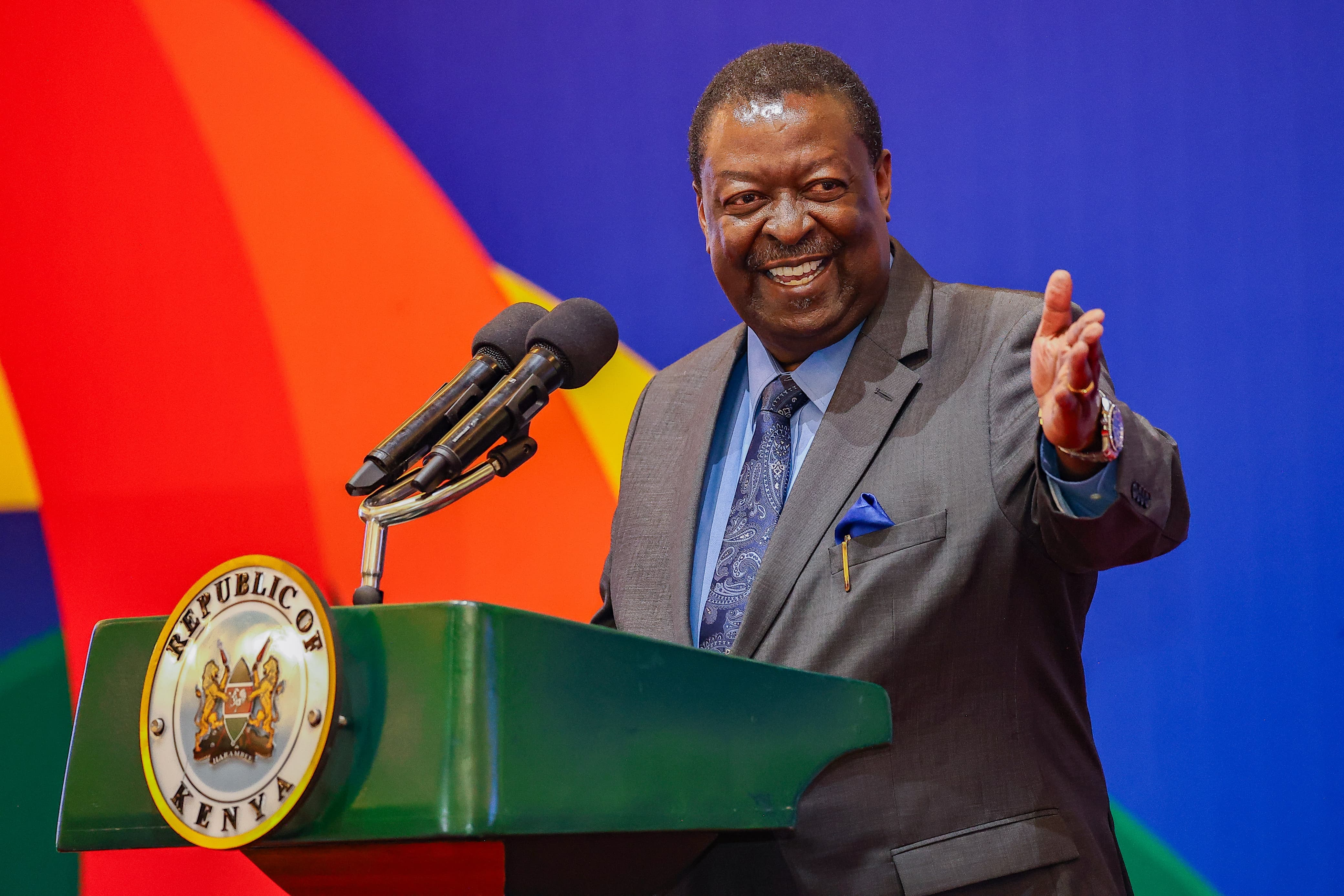
Prime Cabinet Secretary Musalia Mudavadi noted that the diagnosis will be in every ministry, and all government institutions as President William Ruto’s government takes the fight against corruption a notch higher.
Speaking during the opening of Kenya Revenue Authority Summit 2024, at a Nairobi hotel, Mudavadi urged the government officers to take the process seriously and insisted that those who will not be part of it then the diagnostic exercise will take up with them.
“We need to take the fight on corruption a notch higher and cast away the spirit of corruption. The war on corruption has taken a long time. We must ask ourselves where corruption is domiciled so that we can tackle it head-on,” said Mudavadi.
The Prime Cabinet Secretary urged the KRA management to widen the tax bracket to increase their collections process to avoid having a small group of Kenyans overtaxed to shoulder the country’s burden.
“You need to bring more people into the tax bracket, targeting the same people for revenues will lead to over-taxation,” said Mudavadi.
Noting that this year’s Africa Customs and Trade Conference was on ‘Trade Facilitation and Domestic Resource Mobilization in the Digital Age’, he said the Summit gave the tax collectors an opportunity for an engagement on constructive dialogue that will lead to administrative procedures, and policy reforms that generate additional revenue for governments and improve the ease of doing business within our jurisdictions.
“In doing so, we must leverage rapid innovation and technological advancements driving the global economy. Tax administrations must proactively adopt technology-driven solutions and systems that facilitate trade and improve domestic resource mobilization,” said Mudavadi.
He said the innovation, from digital taxation platforms that simplified compliance to blockchain technologies that enhance transparency in trade logistics, offered powerful tools for revenue generation and efficient trade management.
Mudavadi said automating customs procedures has significantly reduced cargo clearance times across the East African Community common border points, enhanced the movement of goods, and facilitated international trade.
“Adopting electronic invoicing systems helps to integrate the informal economy into the formal tax base, widening the scope for domestic resource mobilization. We must rethink traditional tax rules and be prepared to implement global solutions that ensure all sectors contribute equitably to the national resource base,” said Mudavadi.
He implored governments to invest in capacity building and technical skills training for their public servants to fully leverage these technologies and maximize the gains from innovation.
“Data analytics, artificial intelligence, and machine learning enable tax authorities to identify trends, improve compliance and risk profiling, and forecast revenue with greater accuracy.,” said Mudavadi.
He emphasised that trade facilitation and domestic resource mobilisation are essential pillars of economic development.
“In an interconnected global economy, the significance of trade facilitation as a key driver of economic growth, and domestic resource mobilisation cannot be overstated. Both elements are critical for enhancing economic resilience, promoting sustainable development, and ensuring that our nations can harness their potential to create inclusive, thriving economies,” said Mudavadi.
Mudavadi said that this year’s summit envisioned enhanced synergy and collaboration in trade facilitation, exchange of information, and knowledge sharing with a focus on innovation, partnerships, and the adoption of best practices to ensure we meet the growing fiscal needs of our countries.
The Prime Cabinet Secretary said effective stakeholder engagement plays a central role in this initiative noting that the governments, private sector, civil society, international organizations, and even consumers were all critical players in the pursuit of sustainable economic growth.
“Collaborative engagements and partnerships with key stakeholders enable governments to develop sound policies that encourage investment, job creation, and economic growth. Partnerships with international organizations provide technical support, best practices, and knowledge-sharing that enhance our ability to collect taxes and manage resources effectively,” said Mudavadi.
Such engagements, Mudavadi said were centred on shared goals, and a unified vision, are critical to shaping effective policy frameworks and advancing citizen participation in public governance. They also deliver mutual benefits to governments and all stakeholders.
He observed that by working together, we create the conditions necessary for businesses to grow and thrive while ensuring that governments can generate revenues to invest in social services, infrastructure, and public goods that uplift the entire population.
In attendance at the Summit were John Mbadi, Cabinet Secretary for National Treasury and Economic Planning, Anthony Mwaura, Chair, KRA Board of Directors, KRA Board of Directors, Humphrey Wattanga, KRA Commissioner General, and Commissioner Generals from Other African Countries.